Every page on this site follows the same ten rules. Here they are, so you can hold us to them.
The direct answer
Ten rules: record every published list and trust none, reference every ingredient's studied dose, grade in three bands, name every interaction, put safety first, never estimate a blend split, do the arithmetic, cap claims by trial length, name what does more, and link to authorities rather than sister sites.
The ten rules
- Record every published list, trust none. Three pages publish three formulas; all three are quoted, and the panel on the bottle received is named as the only authority.
- Set every ingredient beside its studied dose. NIH ODS and NCCIH references for every ingredient on any list, so a reader can see what a dose would look like — and that none is printed.
- Grade in three bands and say why. Supported, Partly, Flagged — each with the reasoning that put it there.
- Name every interaction with its ingredient. Grapefruit with statins, licorice with blood pressure, berberine with pregnancy, gymnema and chromium with diabetes drugs.
- Safety first, literally. “Not a diabetes treatment” and the hypoglycaemia caution appear near the top of every relevant page.
- Never estimate. A proprietary blend hides the split; this desk never guesses it.
- Do the arithmetic. Bottle volume divided by dropper count; blend total against combined studied doses.
- Timeline caps every claim. Glucose trials run eight to twelve weeks; no claim runs ahead of that.
- Name what does more. Medication, a post-meal walk, fibre, sleep and a glucose meter are named wherever they outperform the product.
- Link to authorities, not sister sites. External links go to NIH, FDA, NIAMS, AAD and FTC — never to other pages selling the same product.
Why we never estimate
It would be easy to write “probably around 9 mg of gymnema” for the 22-ingredient version, and it would read authoritatively. It would also be invented. A proprietary blend hides the split, and the only honest statement is that no split of 200 mg reaches a studied dose for any of its 22 ingredients.
Sources
The three selling pages fetched at the time of writing; the supplied brand artwork; NIH Office of Dietary Supplements and NCCIH fact sheets; the FDA consumer update on grapefruit and drugs; NIDDK and FTC guidance. All are linked from the pages that rely on them.
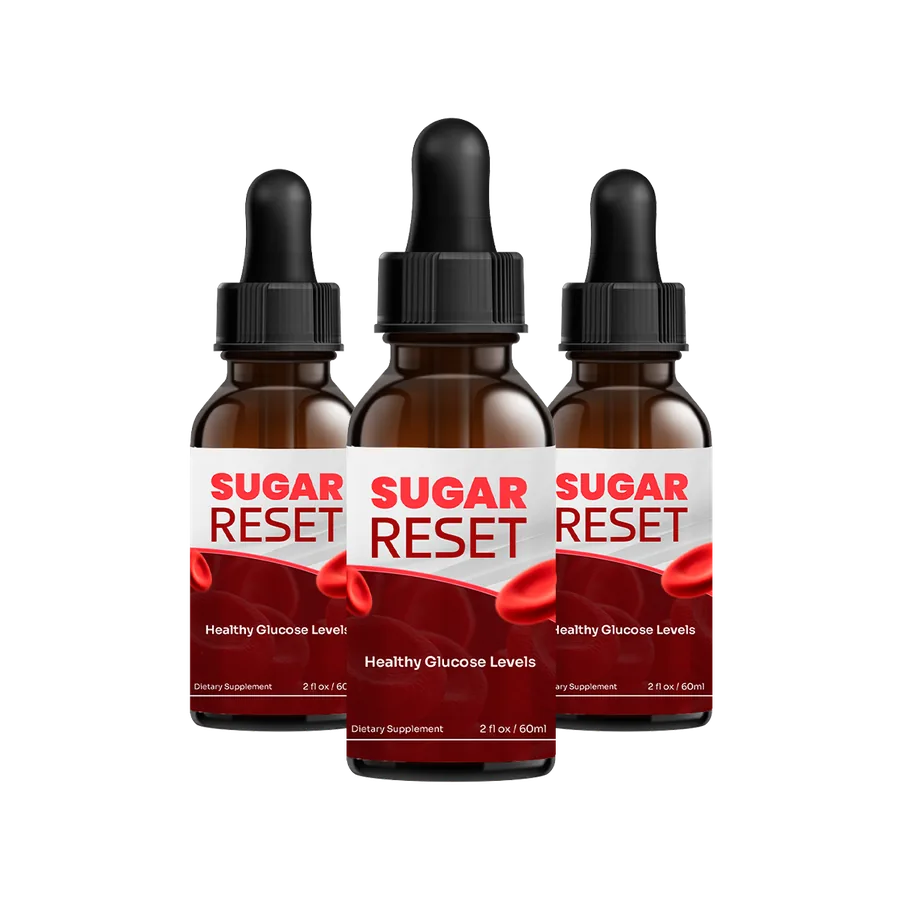
Sugar Reset Official Website
per bottle on the 6-bottle pack · free US shipping on 3 and 6
Check Current Price 60-day guarantee · official checkout only